
伊勢崎銘仙とは

Japan’s Modern Everyday Silk Kimono
Meisen
Meisen is a type of silk kimono that became popular across Japan from the Taisho era to the early Showa period (1910s–1930s).
It was widely worn by women as everyday clothing and fashionable attire, known for its expressive colors, bold patterns, and modern sensibility.
Technically, Meisen is defined as a 100% silk, yarn-dyed, plain-woven textile.
By dyeing the threads before weaving, artisans were able to create slightly blurred edges and dynamic patterns — a distinctive aesthetic that set Meisen apart from more formal kimono fabrics.
The main production centers of Meisen were located in northern Kanto, historically known as the five major Meisen regions:
- Kiryu
- Ashikaga
- Chichibu
- Hachioji
- Isesaki
Among them, Isesaki Meisen became especially celebrated for its playful designs and vibrant color combinations.
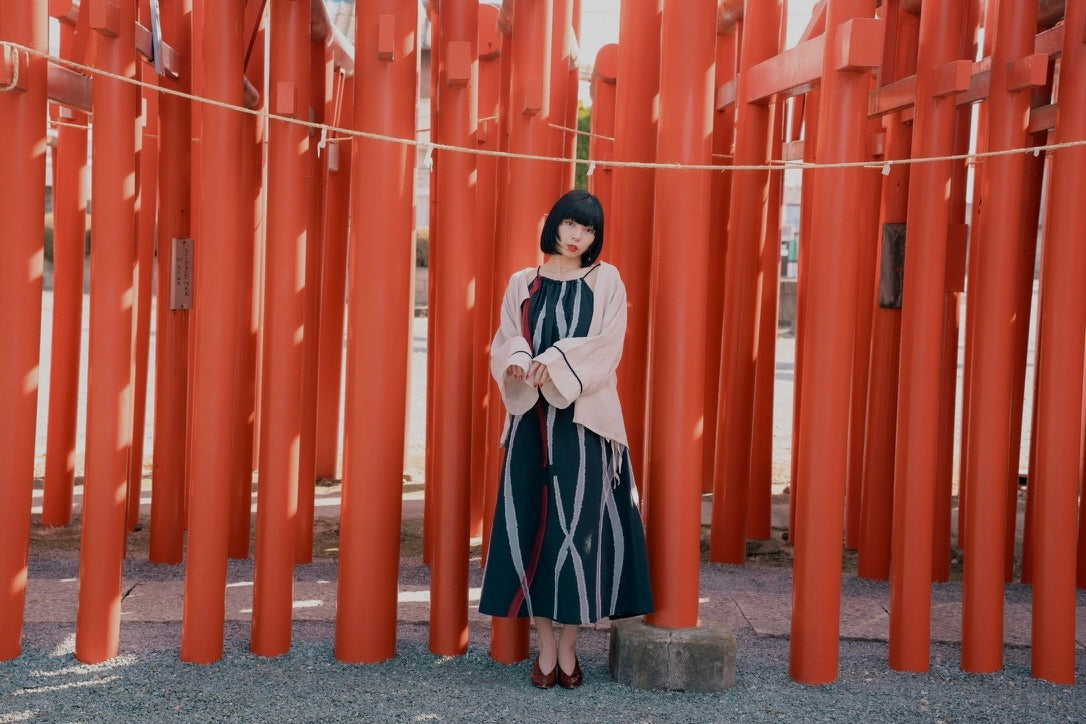
Today, Ay upcycles rare vintage Meisen textiles — particularly Isesaki Meisen — into one-of-a-kind garments.
Once cherished as everyday fashion, these fabrics are reborn as contemporary wearable art, carrying the joy and creativity of modern Japan’s past into the present.

A Bold Expression of Japanese Silk Craft
Isesaki Meisen
Isesaki Meisen is a distinctive type of Meisen silk kimono fabric, renowned for its vivid colors and graphic patterns created through an advanced technique known as Heiyō-Gasuri (combined kasuri).
Unlike standard kasuri, this method dyes patterns into both the warp and weft threads before weaving. During the weaving process, each individual thread is carefully aligned by hand, allowing sharp, dynamic patterns to emerge with remarkable precision and depth. This highly skilled technique is what gives Isesaki Meisen its iconic clarity and vibrant expression.
Historically, Isesaki City in Gunma Prefecture was the largest production center of Isesaki Meisen.
Supported by a silk culture that dates back to the Nara period, the region developed into a major textile hub. From the Meiji era through the Showa period, Isesaki Meisen became so widespread that it is said one in ten women in Japan wore Meisen as part of their everyday wardrobe.
Today, however, the production of Isesaki Meisen has declined and is no longer active.
The textiles that remain are rare cultural artifacts — fragments of a time when fashion was bold, accessible, and deeply connected to daily life.
Ay upcycles these precious vintage Isesaki Meisen fabrics into contemporary garments, allowing their colors, stories, and craftsmanship to live on as modern wearable art.
A Historic Town of Silk Weaving
Isesaki City, Gunma
Isesaki is a historic textile town in Gunma Prefecture, known alongside Kiryu as one of the region’s two major silk weaving centers.
Silk culture in this area dates back centuries, supported by a long tradition of sericulture. Some records suggest that silk production in the region can be traced as far back as ancient times, forming the foundation of local industry and daily life.
During the mid-Edo period, sericulture farmers began weaving a textile known as Futoori-jima during the agricultural off-season. This practical striped fabric marked the beginning of Isesaki’s weaving culture.
By the mid-Meiji period, these techniques evolved into what became known as Isesaki Meisen — an affordable, stylish silk fabric embraced by ordinary people across Japan.
From everyday wear to fashionable kimono, Isesaki Meisen reflected the creativity and vitality of modern Japan.
Today, Isesaki City remains a place where the legacy of silk weaving continues to inspire new forms of cultural expression.
Ay was born from this soil — carrying the spirit of Isesaki’s textile heritage forward through contemporary fashion and sustainable design.
